Not All Jelly Bras Are The Same What To Know Before You Source Or Develop One
Apr 25, 2026
As Jelly Bras continue to gain traction in modern lingerie collections, more brands are entering the category — often with similar claims:soft, seamless, supportive, invisible.But once these products reach real consumers, a pattern starts to emerge.
Some perform exactly as expected — offering a rare balance of comfort and support.
Many others, however, quickly fall short.
They feel good at first touch, but fail in wear.
They look refined in photos, but lack stability in motion.
The question is not whether jelly bras work.
The real question is: why so many of them don’t.
The Illusion of Sameness
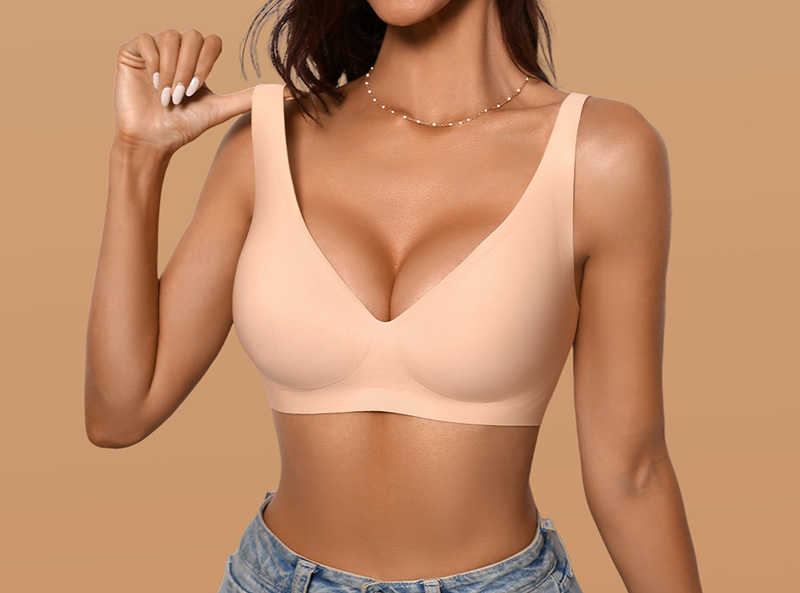
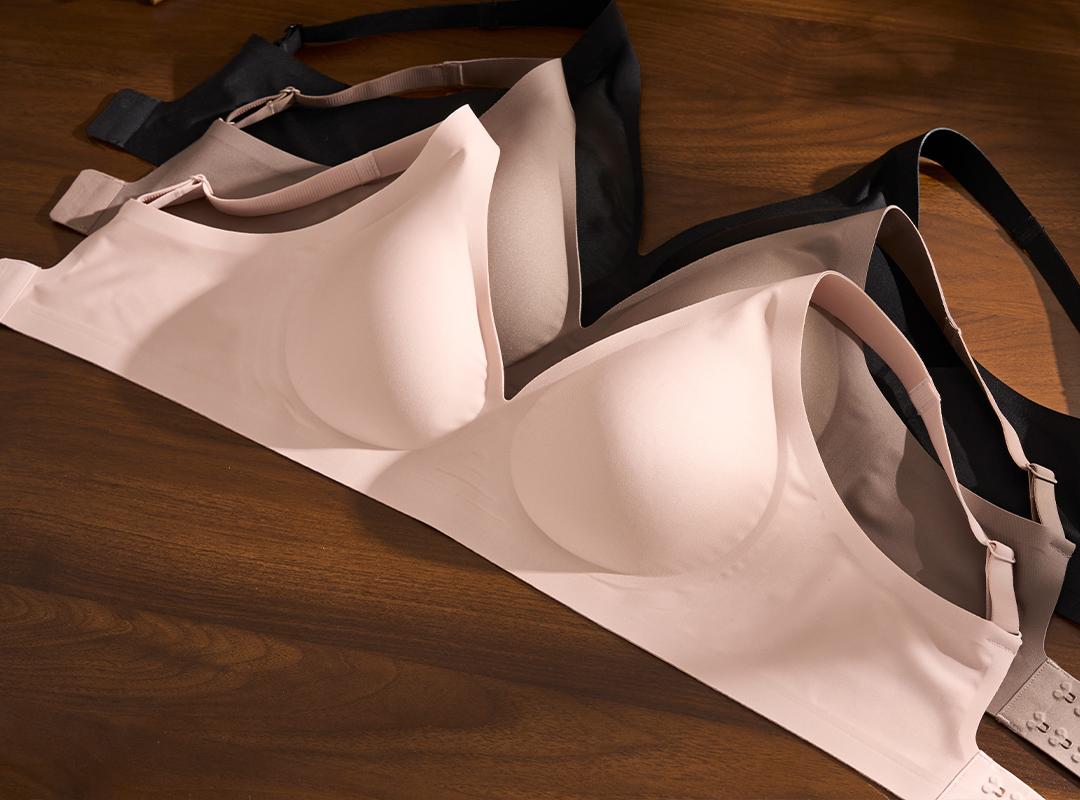
At a glance, most jelly bras look nearly identical.
They share:
molded cups
smooth surfaces
soft-touch interiors
From a sourcing perspective, this creates a dangerous assumption:
if they look the same, they must perform the same.
In reality, jelly bras are not defined by appearance, but by what happens beneath the surface — in how they manage force, movement, and recovery.
And this is where most products begin to fail.
Where Things Go Wrong: Not Material, But Structure
A common misconception is that jelly bras are simply about using a “better” or “softer” material.
But softness alone does not create support.
In many lower-quality products, jelly is treated as an add-on — a layer inserted into an otherwise standard wireless bra construction. The result is predictable:
the bra feels soft, but behaves like any other low-support design.
What’s missing is not the material itself, but the structural logic behind it.
Well-engineered jelly bras are designed as systems, not assemblies.
They distribute force across the garment — through the cup base, the side wings, and the back — rather than relying on a single area to carry the load.
When this distribution is absent, the product loses stability, no matter how soft or advanced the material appears.
The Hidden Role of Elastic Behavior
Another difference, less visible but equally critical, lies in how the material responds under pressure.
High-quality jelly structures behave dynamically.
They remain soft under light contact, yet provide increasing resistance as load builds.
This adaptive response is what allows a bra to feel comfortable at rest, but supportive in motion.
In contrast, many lower-grade versions behave in a more linear way — they compress easily, but do not recover or respond effectively as movement increases.
This is why some products feel promising in the fitting room, but fail during extended wear.
They are not engineered to respond — only to compress.
Integration vs Attachment
One of the most overlooked differences in jelly bras is how the structure is built into the product.
In higher-end designs, the jelly support is integrated into the molded form itself. It becomes part of the geometry — shaping how force travels through the bra.
In lower-cost versions, the gel is often added afterward — inserted, glued, or layered onto foam.
This distinction may seem subtle, but its impact is significant.
An integrated structure allows for continuous stress flow across the surface.
An attached layer interrupts that flow.
Over time, this leads to:
instability in shaping
separation between layers
inconsistent performance
What appears to be the same feature is, in practice, a completely different system.
Why Durability Fails So Quickly
Another common complaint in lower-quality jelly bras is that they don’t last.
The initial feel may be acceptable, but after repeated wear or washing, the structure changes:
support weakens
shape softens
fit becomes less reliable
This is often attributed to “material quality,” but the issue is more complex.
Durability in jelly bras depends on:
how well the material recovers after deformation
how stable the bonding and construction are
how evenly stress is distributed during use
If any part of this system is compromised, degradation accelerates.
What fails is not just the material — but the relationship between material and structure.
The Real Gap Between Products
From a commercial perspective, the most important insight is this:
the difference between jelly bras is not visible — but it is absolutely measurable in performance.
Two products may look identical, share similar specifications, and even use similar terminology.
But their behavior in real use — in lift, stability, recovery, and comfort — can be fundamentally different.
This is why the category often feels inconsistent to brands entering it for the first time.
The variation is not accidental.
It is the result of different levels of engineering investment.
What This Means for Lingerie Brands
For brands, the implication is clear.
Jelly bras are not a shortcut to innovation.
They are a category that requires deeper product understanding.
Approaching them as a simple extension of seamless bras often leads to:
underperforming products
unclear positioning
difficulty justifying price differences
But when approached as a structural upgrade to wireless design, jelly bras open a different path:
more stable support without underwire
clearer differentiation from basic seamless products
stronger foundation for premium collection
In that sense, the real value of jelly technology is not in how it feels at first touch —
but in how it performs over time.
A Different Way to Think About Jelly Bras
A more practical way to evaluate jelly bras is to shift the focus:
from the presence of jelly material
to the design of the support system itself.
Because performance is not defined by materials alone,
but by how they are engineered into the structure.
Conclusion
Most jelly bras don’t fail because the concept is flawed.
They fail because the execution stops at the surface.
True performance in this category comes from understanding jelly not as a feature, but as part of a — one that manages force, adapts to movement, and maintains integrity over time.
For brands willing to approach it this way, jelly bras are not just another product variation.
They represent a deeper shift in how wireless support can be designed — and how value can be built beyond price.
Contact us at below:
📩 Email: Lexie@Sharicca.com🌐 Website: www.chuangrongapparel.com