BLOG
  • Not All Jelly Bras Are The Same What To Know Before You Source Or Develop One
    Not All Jelly Bras Are The Same What To Know Before You Source Or Develop One Apr 25, 2026
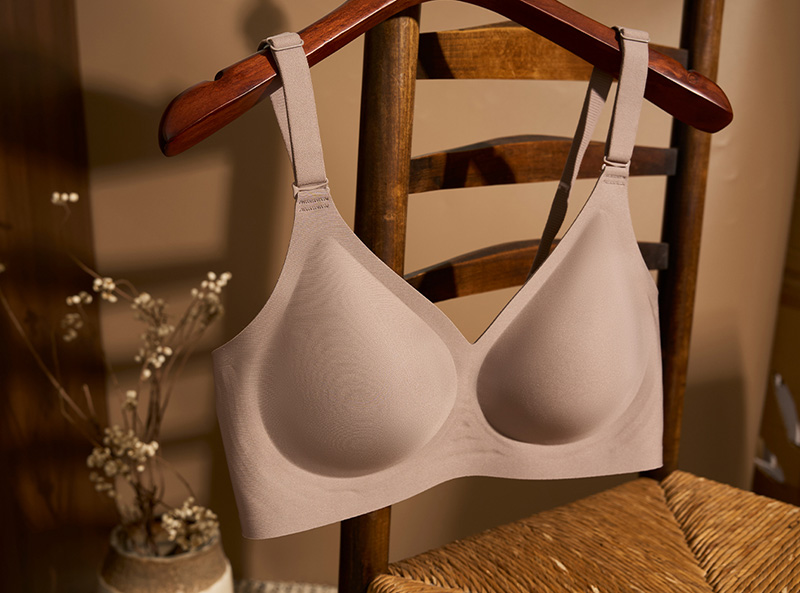
    As Jelly Bras continue to gain traction in modern lingerie collections, more brands are entering the category — often with similar claims:soft, seamless, supportive, invisible.But once these products reach real consumers, a pattern starts to emerge. Some perform exactly as expected — offering a rare balance of comfort and support. Many others, however, quickly fall short.   They feel good at first touch, but fail in wear. They look refined in photos, but lack stability in motion. The question is not whether jelly bras work. The real question is: why so many of them don’t.   The Illusion of Sameness At a glance, most jelly bras look nearly identical. They share: molded cups smooth surfaces soft-touch interiors   From a sourcing perspective, this creates a dangerous assumption: if they look the same, they must perform the same.   In reality, jelly bras are not defined by appearance, but by what happens beneath the surface — in how they manage force, movement, and recovery. And this is where most products begin to fail.     Where Things Go Wrong: Not Material, But Structure A common misconception is that jelly bras are simply about using a “better” or “softer” material. But softness alone does not create support. In many lower-quality products, jelly is treated as an add-on — a layer inserted into an otherwise standard wireless bra construction. The result is predictable: the bra feels soft, but behaves like any other low-support design.   What’s missing is not the material itself, but the structural logic behind it. Well-engineered jelly bras are designed as systems, not assemblies. They distribute force across the garment — through the cup base, the side wings, and the back — rather than relying on a single area to carry the load. When this distribution is absent, the product loses stability, no matter how soft or advanced the material appears.   The Hidden Role of Elastic Behavior Another difference, less visible but equally critical, lies in how the material responds under pressure. High-quality jelly structures behave dynamically. They remain soft under light contact, yet provide increasing resistance as load builds. This adaptive response is what allows a bra to feel comfortable at rest, but supportive in motion.   In contrast, many lower-grade versions behave in a more linear way — they compress easily, but do not recover or respond effectively as movement increases. This is why some products feel promising in the fitting room, but fail during extended wear. They are not engineered to respond — only to compress.   Integration vs Attachment One of the most overlooked differences in jelly bras is how the structure is built into the product. In higher-end designs, the jelly support is integrated into the molded form itself. It becomes part of the geometry — shaping how force travels through the bra. In lower-cost versions, the gel is often added afterward — inserted, glued, or layered onto foam.   This distinction may seem subtle, but its impact is significant. An integrated structure allows for continuous stress flow across the surface. An attached layer interrupts that flow. Over time, this leads to: instability in shaping separation between layers inconsistent performance   What appears to be the same feature is, in practice, a completely different system.   Why Durability Fails So Quickly Another common complaint in lower-quality jelly bras is that they don’t last. The initial feel may be acceptable, but after repeated wear or washing, the structure changes: support weakens shape softens fit becomes less reliable   This is often attributed to “material quality,” but the issue is more complex. Durability in jelly bras depends on: how well the material recovers after deformation how stable the bonding and construction are how evenly stress is distributed during use   If any part of this system is compromised, degradation accelerates. What fails is not just the material — but the relationship between material and structure.   The Real Gap Between Products From a commercial perspective, the most important insight is this: the difference between jelly bras is not visible — but it is absolutely measurable in performance.   Two products may look identical, share similar specifications, and even use similar terminology. But their behavior in real use — in lift, stability, recovery, and comfort — can be fundamentally different. This is why the category often feels inconsistent to brands entering it for the first time. The variation is not accidental. It is the result of different levels of engineering investment.    What This Means for Lingerie Brands For brands, the implication is clear. Jelly bras are not a shortcut to innovation. They are a category that requires deeper product understanding. Approaching them as a simple extension of seamless bras often leads to: underperforming products unclear positioning difficulty justifying price differences   But when approached as a structural upgrade to wireless design, jelly bras open a different path: more stable support without underwire clearer differentiation from basic seamless products stronger foundation for premium collection   In that sense, the real value of jelly technology is not in how it feels at first touch — but in how it performs over time.   A Different Way to Think About Jelly Bras A more practical way to evaluate jelly bras is to shift the focus: from the presence of jelly material to the design of the support system itself. Because performance is not defined by materials alone, but by how they are engineered into the structure.   Conclusion Most jelly bras don’t fail because the concept is flawed. They fail because the execution stops at the surface. True performance in this category comes from understanding jelly not as a feature, but as part of a   — one that manages force, adapts to movement, and maintains integrity over time.   For brands willing to approach it this way, jelly bras are not just another product variation. They represent a deeper shift in how wireless support can be designed — and how value can be built beyond price.   Contact us at below: 📩 Email: Lexie@Sharicca.com🌐 Website: www.chuangrongapparel.com  

  • Why Jelly Bras Are Becoming A Long-Term Category
    Why Jelly Bras Are Becoming A Long-Term Category Apr 24, 2026
    Walk into today’s lingerie market, and you’ll see a familiar landscape: seamless bras, wireless bras, bonded underwear — categories that have been optimized for comfort, efficiency, and cost. For many brands, working with a Seamless Bra Manufacturer or sourcing from an OEM lingerie manufacturer for wireless bras has become a standard part of building an entry-level product line. And for a long time, that was enough.     Seamless Jelly Strip bras delivered exactly what the market asked for — lightweight comfort, invisible wear, and competitive pricing. But as more brands enter the category and product offerings become increasingly similar, a new challenge emerges: How do you move beyond basic products and build real differentiation? This is where jelly bras are no longer just an option — they are becoming a strategic category.   When the Seamless Category Reaches Its Ceiling Traditional seamless bras are built around a clear logic: fabric stretch, foam shaping, and elastic tension. This construction makes them ideal for large-scale production and allows brands to work efficiently with a Private Label Seamless Bra Supplier.     However, the same structure that makes them easy to scale also defines their limitations. Because support relies mainly on compression, these bras often struggle to deliver: Consistent lift Long-term shape retention Stable support for mid-to-full bust sizes For brands targeting higher-value segments, this becomes a critical issue. When every product offers similar comfort, comfort alone stops being a competitive advantage.   Jelly Bras: A Structural Upgrade for Modern Wireless Collections What sets jelly bras apart is not visible at first glance. From the outside, they still belong to the world of seamless, invisible lingerie. But internally, they are engineered very differently. By integrating flexible jelly support strips, these bras introduce a new support logic —one that combines flexibility with structure.   For brands working with a jelly bra OEM manufacturer or developing a Custom Wireless Seamless Bra with support structure, this means: The ability to offer a product that feels soft, but performs closer to a structured bra. Instead of flattening the bust, jelly bras gently lift and shape it. Instead of losing support over time, they maintain a more stable form. This is not just a product upgrade — it is a shift in how wireless bras are engineered.   Why Performance Over Time Matters More Than Ever In today’s market, first impressions are no longer enough Consumers wear products longer, compare more, and expect consistency. Traditional seamless bras often depend on foam resilience and fabric recovery. As these materials fatigue, support gradually weakens. For brands, this leads to: Decreased customer satisfaction Higher return rates Difficulty maintaining a premium image Jelly bras address this through structural memory. Because support comes from flexible internal elements rather than compression alone, the bra maintains its shape and performance more effectively over time. For brands developing high quality wireless bras for premium lingerie brands, this directly translates into stronger product credibility and repeat purchase potential.   Moving Away from Price-Driven Competition One of the biggest challenges in the seamless category is price pressure. When multiple suppliers offer similar products, brands are often pushed toward cost competition. This is where working with a lingerie manufacturer for innovative bra design becomes increasingly important. Jelly bras provide a clear opportunity to shift positioning: From price → to performance From basics → to engineered products Instead of asking how to reduce cost, brands can start focusing on how to create value through: Better support Improved fit Enhanced durability This is what allows jelly bras to evolve into core premium wireless products, rather than just another SKU.   Fit Consistency Across Markets As brands expand into global markets, fit becomes more complex. Different regions bring different body shapes, size expectations, and wearing habits. Traditional seamless bras often struggle to maintain consistent performance across sizes. Jelly bras, with their reinforced base and side support,offer a more adaptable structure.   For brands working with a custom lingerie manufacturer for international markets, this creates a more scalable solution — one that maintains performance across a wider range of sizes and consumers.   Not a Replacement — But a Strategic Layer It’s important to recognize that jelly bras are not meant to replace seamless bras entirely. Seamless products will always remain essential for: Entry-level collections High-volume basics Price-sensitive markets What jelly bras introduce is a new layer: A product tier that sits between comfort-only brasand fully structured underwire bras. For brands building a complete collection, this layer is no longer optional —it is increasingly necessary.   Why This Category Will Continue to Grow The shift we are seeing is not driven by trend alone, but by changing consumer expectations. Today’s customers are no longer willing to choose between: comfort or support, They expect both. And as this expectation becomes the norm, products that successfully combine these two elements will continue to gain importance. This is why more brands are actively exploring partnerships with a jelly bra OEM manufacturer or developing their own custom wireless bra with support structure —not as a short-term experiment, but as part of a long-term product strategy.   Instead of replacing seamless bras, jelly bras are becoming a necessary upgrade within the wireless category. For brands looking to move beyond basic comfort products, the real question is no longer whether this direction matters — but how quickly it should be integrated into the collection. In a saturated seamless market, real differentiation no longer comes from doing the same thing at a lower price. It comes from offering something structurally better. Jelly bras represent that shift. By combining: Flexible support technology Long-term shape retention Elevated product performance They allow brands to move beyond basic comfort and build collections with stronger identity and higher value.   For brands looking to evolve their wireless category, the question is no longer if jelly bras should be considered — but when and how to integrate them into the product strategy.   If you are exploring custom jelly bra development, or looking for a reliable OEM lingerie manufacturer for premium wireless bras, working with a factory that understands both seamless bonding and structural support engineering will be key to achieving the right balance between comfort, performance, and scalability.   Contact us at below: 📩 Email: Lexie@Sharicca.com🌐 Website: www.chuangrongapparel.com    

Contact Us

Send a Message

If you are interested in our products and looking for wholesale, or looking to customize your design, please leave a message here.
Submit

Need Help? Chat with us

Send a Message
If you are interested in our products and looking for wholesale, or looking to customize your design, please leave a message here.
Submit
Contact us #
+86 13728718457

Our hours

Mon 11/21 - Wed 11/23: 9 AM - 8 PM
Thu 11/24: closed - Happy Thanksgiving!
Fri 11/25: 8 AM - 10 PM
Sat 11/26 - Sun 11/27: 10 AM - 9 PM
(all hours are Eastern Time)

Home

Products

whatsApp

contact